I am compelled to create and respond to the world around me. I am driven to make art and restless if I don’t. I can spend days in my studio working, so fascinated and motivated to see the results, that I don’t sense time passing.
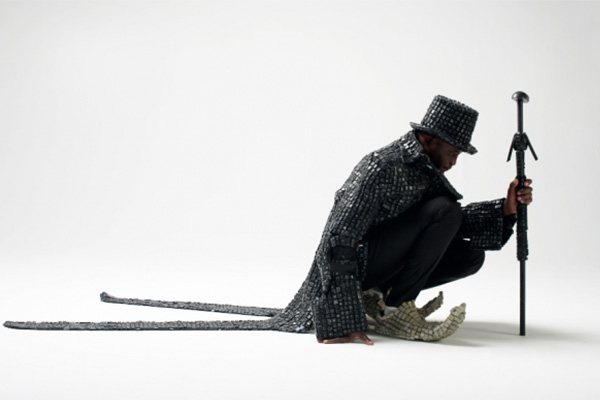
My work as an African artist is a testament to the technical, wasteful, brutal age we are in, while referencing beauty, such as that of fashionable dandyism of 19th and 20th centuries.
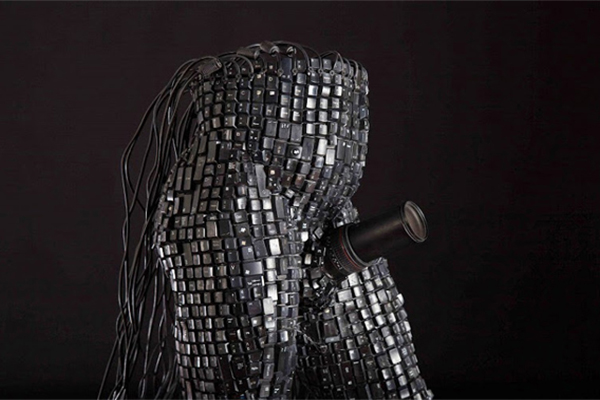
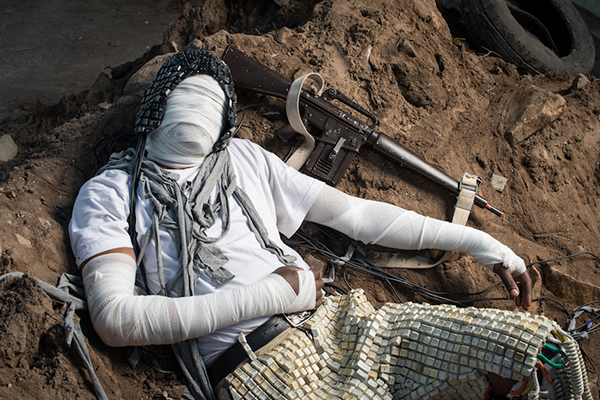
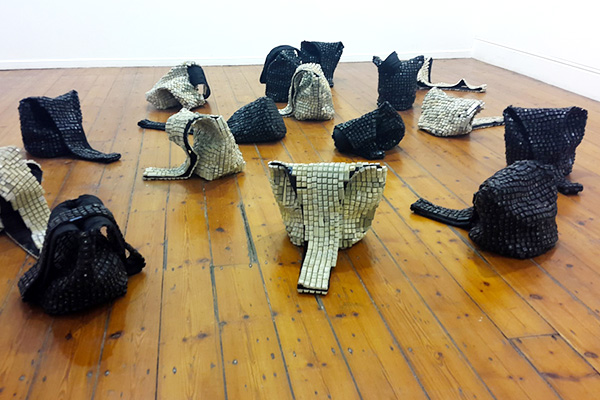
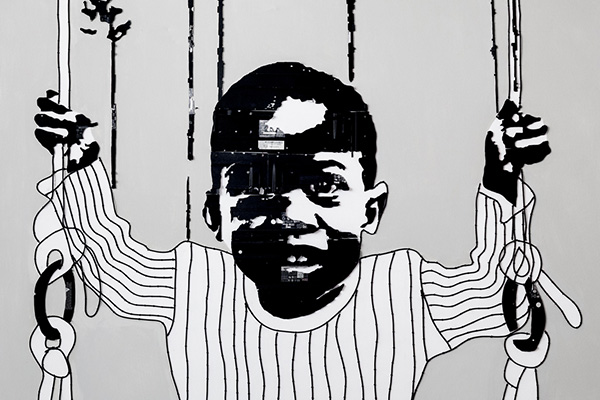
Making and wearing my costumes made from collected computer parts situates me between cultures, histories and racial identities. I consider my costumes and sculptures as cyborgs or pseudo-cyborgs that have risen from discarded technology as a form of “prosthetic identity”. My costumes are treated like armour, to resist against consumption, rampant capitalism and waste, but their very existence questions at what point is our body relevant. Computer fragments I use bear fingerprint deposits of the people who handled them and leave a story that I carry with me while adding my own. The memories are mixed and continued, creating new narratives.
Contemporary technology uses products that connect Africa to the major global centres of production. The more fashionable it is, the more addictive it becomes. So, I combine both analogies in my creations to convey the idea of how both addictions feed into each other narratives and subtly reconfigure our psychological landscape as a facade or a reinvention of the self, for which we easily develop dependence to.

How my life experiences inform my work as an African artist
My work is motivated also by my own life experiences, as on August 12, 2001, in Kinshasa, a collapsing garage roof flung me 5 meters headfirst onto the pavement. I survived this near-death experience, with minor head injuries, along with a seriously shattered right forearm, as well as a dislocated wrist and elbow bones. This marked a turning point in my career, channelling this experience into my work. My path led to extensive use of bandages and animals as symbols of vulnerability, yet strength and resilience.
Many of my works were inspired by it, for example Voices (2009), a performance in which I used bandages and a horse. During the recovery, I took on the challenge of learning to ride a horse despite my arm agony, which took months of intensive lessons. I often rode police horses, and to ensure my safety during the performance, police escorted me. I was even mistaken for a police officer beaten, bandaged, and escorted by his colleagues to safety.
In 2010, I began living in an abandoned building in downtown Cape Town for 3 years in a row, it gave me space to work. I managed to get a second-hand laptop, which needed frequent repair from a friend. Each time I visited his workshop, I saw piles of electronic waste. The fascination of the piles triggered my creativity, then I asked my friend if I could use them.
Eventually, large projects led me to seek out more materials and the piles in my studio grew higher. That how I began to question the notions of capitalism, consumerism and electronic waste as well as the impact of contemporary technology on society which transforms us into a kind of cyborg.
This has been the foundation of my journey as an African artist, and one which continues to evolve as my practise grows and I go deep into my own world and the ever changing world around me.